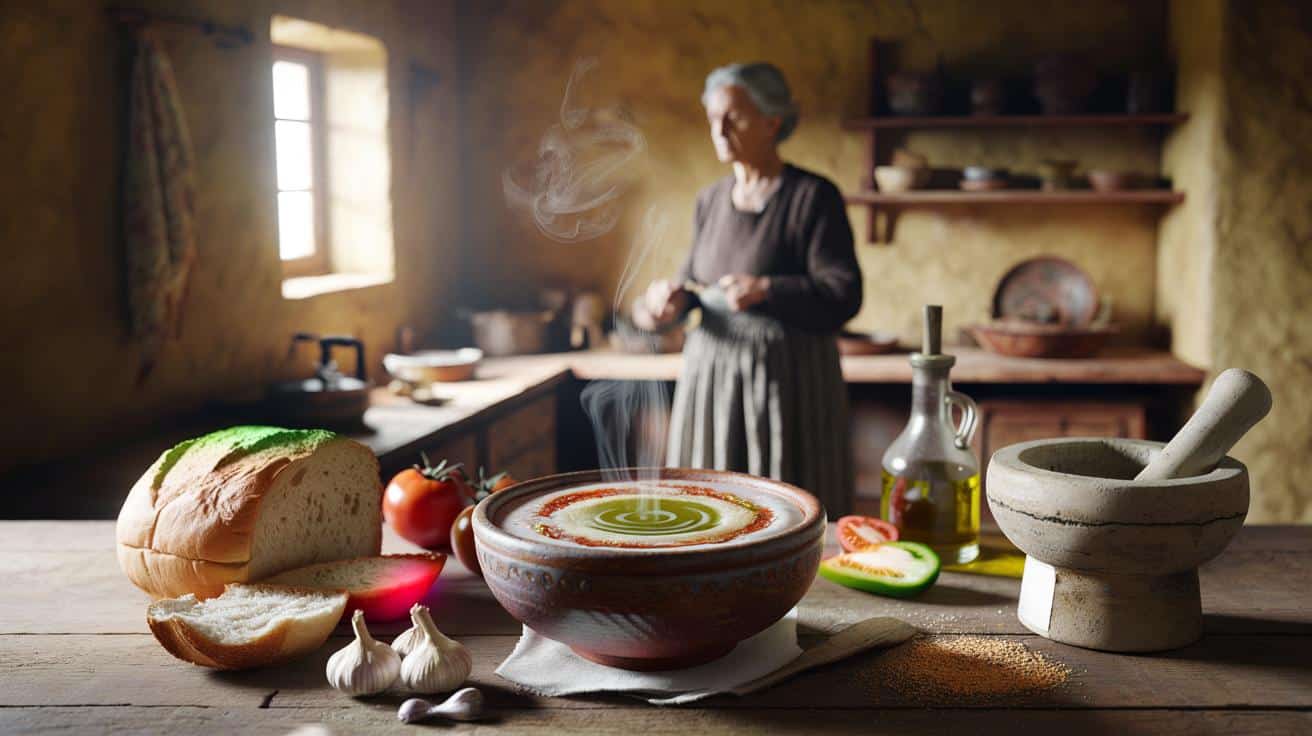
Across rural Spain, one humble, steaming bowlful kept turning up on kitchen tables: a thick, garlicky gazpacho called “Ajo-Molinero”. It was cheap, filling and endlessly adaptable. Eighty years later, most younger Spaniards have never tasted it, and even many grandmothers struggle to recall its exact recipe.
The forgotten soup that fed a country
The Spanish postwar period, from the late 1930s through the 1950s, was marked by rationing, black markets and empty pantries. Meat was rare. Fresh produce came and went with the seasons. Bread, when you could get it, went stale fast.
That mix of scarcity and necessity shaped an entire generation’s cooking. Nothing went to waste. Yesterday’s bread became today’s lunch, often quite literally.
Ajo-Molinero was a hot, dense cousin of gazpacho that turned old bread, garlic and a few vegetables into hard-earned fuel for the day.
Unlike the chilled Andalusian gazpacho tourists know today, this older version was eaten with a spoon. It was served hot or at least warm, and it was built around one goal: keep a labourer going through long hours in the fields or factories.
From “refreshing soup” to survival food
The idea of soaking bread in flavoured liquid is ancient in Mediterranean cooking. Peasant families used it everywhere from Italy to Portugal. In postwar Spain, that tradition turned pragmatic.
Ajo-Molinero used what nearly every home could still find:
- Stale bread, often several days old
- Garlic, almost always hanging in braids in the kitchen
- Tomato, fresh when possible, preserved when not
- Green pepper from the garden or local market
- A generous splash of olive oil
- Water and salt, nothing fancy
The result was closer to a hot porridge than a light soup. Thick, slightly rustic in texture, and surprisingly nourishing for something so basic.
How Ajo-Molinero was actually made
Most families never used scales or measuring spoons. They cooked “a ojo” – by eye, by habit, and by the size of the hunger in the room.
➡️ The surprising reason this “healthy” food leaves so many people feeling bloated
➡️ This herbal tea touted on social media does more harm than good
➡️ Lower in calories than rice or pasta, this is the lightest starch for making a mixed salad
➡️ Wood-burning stove: the object to place near your firewood this winter
| Ingredient | Typical amount | Reason for using it |
|---|---|---|
| Stale bread | 250–300 g or whatever was left | Bulk, carbohydrates, zero waste |
| Tomatoes | 2 medium | Acidity, flavour, some vitamins |
| Garlic cloves | 3–4 | Strong taste, believed to protect health |
| Green pepper | 1 small | Freshness, aroma, extra nutrients |
| Olive oil | 4–5 tablespoons | Fat for energy and satiety |
| Water and salt | Enough to cook and season | Make it soupy, keep it cheap |
Step-by-step, as it was done at home
Reconstructed from traditional accounts, the method looked like this:
The real “secret” was not finesse but function: a bowl was meant to keep you full for hours, even on heavy labour days.
Texture varied by household. Some left small pieces of bread intact for a rustic bite. Others mashed it to a near cream. Seasoning was also flexible: a pinch of paprika if they had it, a little vinegar in some regions, even a stray sardine or bit of leftover chorizo on good days.
Why hardly anyone cooks it today
The dish began to disappear once Spain started to recover economically in the 1960s. Supermarkets arrived. Fridges widened the options. Meat, dairy and processed foods became reachable for many families.
Children who had grown up on Ajo-Molinero and similar “hunger recipes” often rejected them as adults. Those plates reminded them of cold winters, food lines and empty cupboards.
As they had more money, they turned to richer stews or modern gazpacho served cold from cartons. The hot version slid quietly out of weekly menus.
A whole repertoire of postwar recipes, built on stale bread and imagination, faded as Spain moved away from its harsh past.
Many grandmothers still remember that “there was something with bread and garlic we ate all the time”, but the precise steps, the right thickness, the feel of it in the hand-mortar, have blurred with time.
A window into postwar survival strategies
Dishes like Ajo-Molinero tell more than a culinary story. They show how families managed long-term scarcity.
Some key tactics behind that survival cooking:
- Maximising calories per ingredient: Bread and oil were cheap calorie bombs.
- Hydration built into meals: Soupy textures helped replace fluids for field workers.
- No-waste mindset: Anything dry or old was rehydrated, never trashed.
- Seasonality: When fresh tomatoes vanished, preserved ones took over.
Garlic also played a symbolic role. In many rural areas, it was seen almost as a household medicine, thought to ward off colds and infections when access to doctors and antibiotics was limited.
Could Ajo-Molinero make a comeback?
Against the backdrop of rising food prices and concern about waste, some Spanish food historians and chefs are revisiting these “recipes of hunger”. They argue that, stripped of the trauma, some of them make a lot of sense today.
Ajo-Molinero, adapted slightly, could fit modern tastes quite easily. Using good-quality bread, ripe tomatoes and fruity extra virgin olive oil, it can become a comforting, rustic soup for cold evenings rather than a symbol of hardship.
For readers curious to try it in their own kitchens, a few tweaks help:
- Use sourdough or country-style bread for better flavour.
- Roast the garlic first for a milder taste.
- Add a splash of sherry vinegar at the end for brightness.
- Top with a soft-boiled egg or a few chickpeas for extra protein.
Understanding “gazpacho caliente” and other terms
The phrase “gazpacho caliente” may sound contradictory to anyone used to the chilled tomato drink served in tapas bars. Historically though, “gazpacho” referred less to temperature and more to the idea of a bread-thickened soup, often meant for workers in the countryside.
Another useful term is “aprovechamiento”, widely used in Spanish kitchens. It basically means “making the most of what you have” — transforming leftovers into new meals. Ajo-Molinero is a classic example of this practice: turning dry bread and a few vegetables into a main dish that can feed a family.
What this old recipe says about eating well on a budget
There is a lesson here for anyone trying to cook cheaply without living on instant noodles. Bread-based soups and stews, used in moderation, can stretch ingredients while still offering decent nutrition.
Imagine a modern scenario: a student in a small flat, with half a loaf going stale, a couple of tomatoes, an onion, garlic and some oil. A simplified version of Ajo-Molinero could turn that into two or three hearty meals with very little extra cost.
The main risks today lie in overdoing the bread-and-oil combination without balancing it. For a healthier plate, pairing a bowl of this soup with a simple salad, some fruit and a source of lean protein keeps it from becoming a one-dimensional carb hit.
As food culture cycles through trends and nostalgia, some of these austere dishes may reappear, not as symbols of deprivation, but as reminders that creativity in the kitchen often starts when cupboards look bare and options feel limited.