As salads take over lunchboxes and dinner tables again, more people want meals that are both satisfying and light. That means rethinking which starches end up in the bowl — and one surprising option is turning out to be lighter than rice or pasta, while still keeping hunger at bay.
The unexpected lightweight of the starch family
When people try to “lighten” their salads, they usually swap pasta for rice and feel they have made a healthier choice. Nutritionally, that swap changes less than you might think. Cooked rice and cooked pasta both hover around 100–120 kcal per 100 g, depending on the type and cooking method.
Yet dietitians are pointing to a different staple entirely: the potato. Not fried, not drowned in cheese, but simply cooked in water or steamed, then cooled. In this form, potato provides roughly 80 kcal per 100 g, making it a lighter starch than both rice and pasta for the same cooked weight.
Cooked in water or steamed, then cooled, the potato becomes one of the lightest starchy bases you can add to a salad.
This lower calorie density means you can eat a generous portion, feel properly full and still keep the total energy of the meal in check. For office workers trying to avoid the mid-afternoon energy crash, that balance matters more than the latest superfood trend.
Why potatoes got a bad reputation
The potato’s image problem comes mostly from what we do to it, not from the vegetable itself. Chips, crisps, creamy gratins and buttery mash all load it with fat and salt. Over time, people started blaming the potato, instead of the litres of oil and piles of cheese surrounding it.
Nutrition data tell a different story. A plain boiled potato is mostly water and complex carbohydrates, with barely any fat. It offers fibre, vitamin C, several B vitamins and minerals like potassium. For many households, especially in Europe, it was historically a vital source of energy and nutrients through the colder months.
The same ingredient that becomes a deep-fried calorie bomb can also be a lean, nutrient-rich base — the cooking method changes everything.
Once you strip away the frying oil and heavy sauces, the potato looks less like a guilty pleasure and more like a reasonable everyday food, especially in salads where portions are moderate and balanced with vegetables and protein.
➡️ The surprising reason this “healthy” food leaves so many people feeling bloated
➡️ What psychology says about people who feel uneasy when things slow down
➡️ Chefs explain why seasoning cast iron at low heat lasts much longer
Calorie comparison: potato vs rice vs pasta
| Food (cooked) | Approx. calories per 100 g | Main features |
|---|---|---|
| Boiled potato (cooled) | ~80 kcal | High satiety, fibre, vitamin C, potassium |
| White rice | ~110–120 kcal | Easy to digest, low fibre unless wholegrain |
| Pasta (white) | ~110–120 kcal | Slow digestion, especially when al dente |
These figures can shift slightly depending on brand and exact cooking time, but the pattern stays clear: for the same cooked weight, potato tends to be less energy-dense while still being filling.
Satiety: feeling full on fewer calories
Dietitians talk often about the “satiating power” of a food — how long it keeps you full. Potatoes score high here. Their mix of water, fibre and starch gives the stomach volume without piling on excessive calories.
When cooled after cooking, part of the starch in potatoes changes structure and becomes what scientists call “resistant starch”. It resists digestion in the small intestine and behaves a bit like fibre in the gut.
Cooling cooked potatoes turns part of their starch into resistant starch, which helps with fullness and may support digestive health.
This means a salad with a modest portion of potato can feel more satisfying than one built only around leafy greens, which are nutritious but very low in energy. For people watching their weight, that feeling of fullness can reduce the temptation to snack on biscuits or sweets later in the day.
Why cooled potatoes are especially interesting
Resistant starch has become a quiet talking point among nutrition researchers. When potatoes are cooked and then cooled — for example, in a salad prepared the night before — some of their starch turns into this less digestible form.
That change can have several effects:
- It slightly lowers the calories your body absorbs from the potato.
- It feeds beneficial bacteria in the gut, acting like a prebiotic.
- It can lead to a gentler rise in blood sugar after the meal.
For people managing blood sugar levels or simply trying to avoid energy spikes, this cooled-potato effect makes salads an interesting way to eat them. You still need to watch portion sizes and overall balance, but the profile is gentler than a plate of hot chips.
Building a balanced potato salad bowl
Turning potato into a light, everyday salad ingredient is mostly about what you put around it. A mayo-heavy “deli style” salad can quickly lose its health halo. A modern, balanced version looks quite different.
Portion and plate structure
A simple guide many dietitians suggest:
- Half the bowl: colourful vegetables (tomatoes, peppers, cucumber, radishes, leafy greens).
- Roughly a quarter: lean protein (beans, chickpeas, lentils, eggs, grilled fish, tofu or chicken).
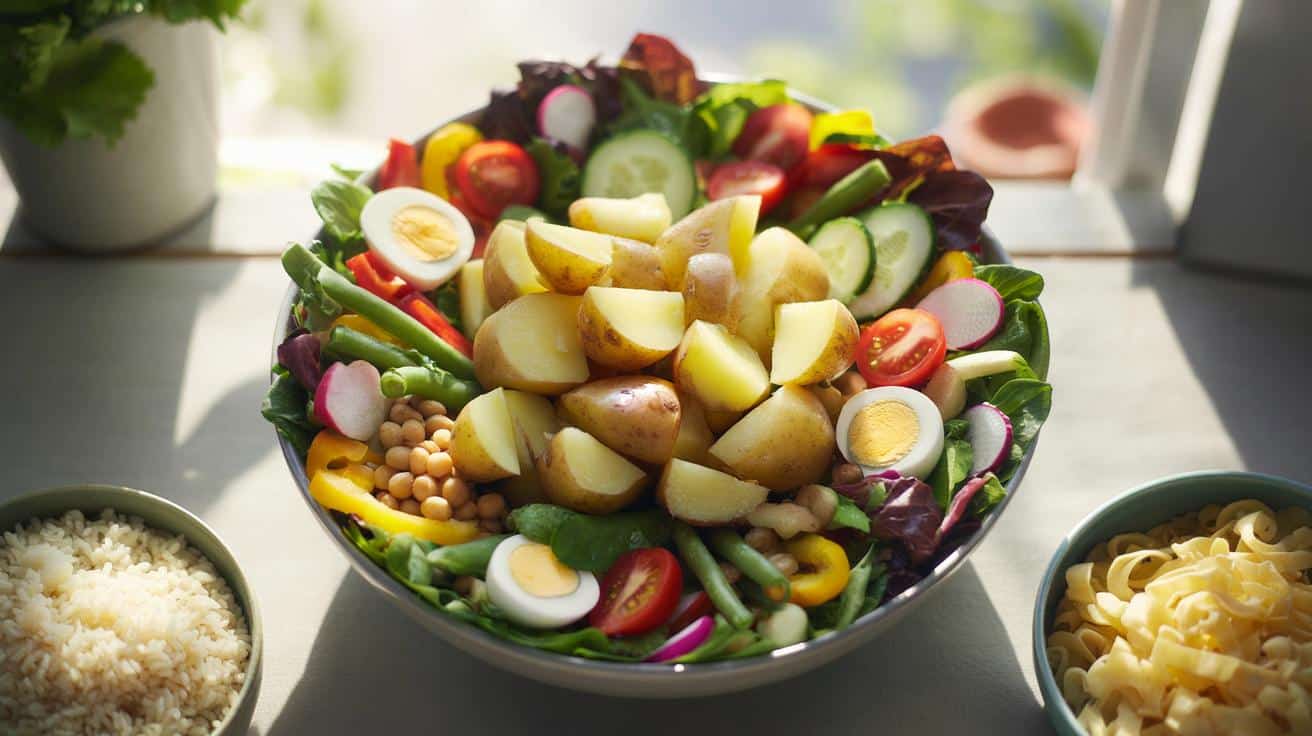
- Up to a quarter: starch, such as cooled boiled potatoes cut into chunks or slices.
Drizzle with a modest amount of olive oil-based dressing, add herbs, and you have a balanced meal: carbohydrates, protein, fibre and healthy fats in one dish.
Practical ideas for lighter salads
Here are a few combinations that work well for lunches or picnics:
- New potato salad with green beans, cherry tomatoes, hard-boiled eggs and a mustard vinaigrette.
- Potato and lentil salad with roasted carrots, red onion, parsley and a lemon-garlic dressing.
- Warm-cold mix: still slightly chilled potatoes with fresh spinach, smoked mackerel and capers.
Using plenty of herbs — chives, dill, parsley, basil — adds flavour without extra calories or salt. A spoonful of yoghurt in the dressing can bring creaminess without the heaviness of full-fat mayonnaise.
Who should be careful, and who benefits most?
For most healthy adults, potatoes in salads fit easily into an everyday diet, especially when they replace more processed starches. People watching their blood pressure may value the potassium content, which supports fluid balance alongside other lifestyle measures.
Those with diabetes or pre-diabetes still need to monitor their overall carbohydrate intake, but cooled potato eaten with vegetables, protein and a little fat tends to raise blood sugars more gently than a large portion of hot mashed potato or fries.
On the other hand, very restrictive low-carb diets sometimes limit potatoes strongly. In that case, a small amount in a salad could still be an option, but it depends on personal goals and medical advice.
Key terms and real-life scenarios
Two notions often raise questions: “starch” and “resistant starch”. Starch is the main carbohydrate stored in plants like potatoes, wheat or rice. Our bodies usually break it down into glucose for energy. Resistant starch is the fraction that escapes this process in the small intestine and reaches the colon, where gut bacteria ferment it.
Imagine two lunches at the office. One is a green salad with three cherry tomatoes, a few cucumber slices and a drizzle of light dressing. It looks virtuous but leaves you hungry an hour later. The second salad includes a handful of cooled potatoes, some chickpeas, sliced vegetables and a boiled egg. The calorie count is still moderate, yet you feel comfortably full until late afternoon.
That second option shows how adding a light starch such as boiled potato can stabilise appetite. Instead of constantly snacking, you eat a structured meal that combines volume, nutrients and satiety. For many people juggling busy days, that simple shift does more for their health than any exotic superfood trend.