The smell hit first. Not the dramatic, rotten-egg odor the cleaning ads warn you about, but that vague, swampy note you only notice when you lean over the sink and hesitate before turning on the tap. A slow gurgle, water rising a little higher around the dishes each night, foam clinging stubbornly to the edges. You think, “I’ll deal with it this weekend,” and then one morning the sink just… refuses. The water stands there, dull and stubborn, like a silent protest in the middle of your kitchen.
You picture the usual weapons: the *volcano* of baking soda and vinegar, the harsh chemical gel that smells like a chemistry lab, the rubber plunger you hate touching.
And then someone tells you there’s a trick with half a glass.
That’s when you start listening.
Why your drains rebel long before they clog
A drain almost never clogs overnight. It sulks first. It protests in small ways. The faint smell, the mini whirlpool that takes forever to disappear, the shower water that creeps over your ankles just a bit too long. Those are the early warning lights on the dashboard of your plumbing.
We usually respond with the same ritual: pour something, wait, hope. Then we scroll on our phones while the water slowly – or not at all – goes down. Sometimes it works, sometimes it doesn’t, and we promise ourselves we’ll be “more careful” with hair, grease, coffee grounds. That promise rarely survives a busy week.
Take Laura, for example, a 34‑year‑old graphic designer who swore she’d never call a plumber for “just a sink.” Her kitchen drain had been getting slower for months. She tried the baking soda and vinegar show twice, even filmed it for Instagram. The fizz looked impressive, the sound was satisfying, and for a couple of days the flow improved.
Then the clog came back, worse. One night, after washing a greasy pan, the sink turned into a metal basin of lukewarm soup that refused to evacuate. She ended up emptying it with a ladle into a bucket at midnight. The next morning, she booked a professional. The bill was enough to cancel her weekend plans.
What happened in her pipes wasn’t magic, just physics and time. Fat from kitchen pans cooled and stuck to the pipe walls like candle wax. Soap scum joined the party, then coffee particles, egg shells, tiny food bits. In the bathroom, hair wrapped itself into knots, trapping shampoo residue and limescale.
Vinegar and baking soda mainly create a lot of foam and carbon dioxide. The show is impressive on the surface, yet the mix often dissolves just a thin layer of gunk and slides past the real plug. The result: a slightly freer drain that clogs again as soon as you relax. The problem isn’t only the clog you see, but the sticky sleeve lining your pipes that keeps catching new debris every day.
➡️ This herbal tea touted on social media does more harm than good
➡️ Workers in this field often earn more by staying in one niche
➡️ Spotless shower screens: the hotel trick for streak-free glass
➡️ What psychology says about people who feel uneasy when things slow down
➡️ Doctors warn: a wave of extreme fatigue is coming – here’s how to avoid it
The half‑glass trick that quietly cleans your pipes
The method people are quietly passing around online has nothing to do with fancy “hacks” and everything to do with regular, gentle cleaning. The “half‑glass trick” is surprisingly simple: you only use half a glass of liquid dish soap and hot water, but you use it in a specific way.
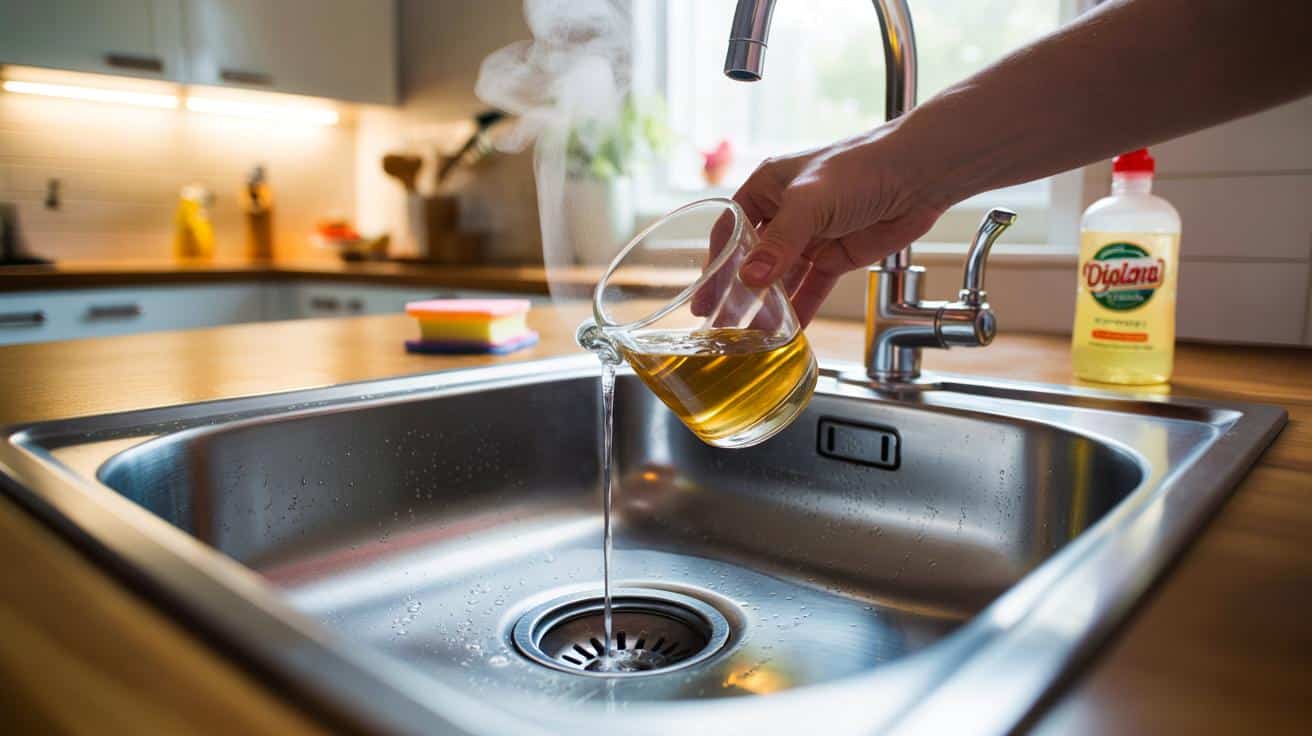
Once a week, when the sink is empty, you slowly pour half a glass of concentrated dish soap directly into the drain. No water yet. You let it sit for about ten minutes so it can stick to the pipe walls and start dissolving grease and soap deposits inside the siphon. Then you follow with a full kettle of very hot – but not boiling – water, poured steadily, not too fast.
This combination acts like a gentle, daily shower for your pipes. The dish soap is designed to cut fat on your plates; it does the same on the invisible film inside your plumbing. The hot water helps liquefy the cooled grease and wash away the softened residue.
Let’s be honest: nobody really does this every single day. But even once a week, or every ten days, can completely change the “ecosystem” inside your pipes. Instead of waiting for a thick plug to form, you’re constantly thinning it out, pushing away the beginnings of clog, like brushing your teeth before you ever need a filling. It’s not spectacular, just quietly efficient.
There are two classic mistakes people make with this method. The first is rushing the hot water. They dump everything at once, too fast, which sends the soap straight into the deeper pipes without really clinging to the gunk near the bend of the drain. The trick is to pour the hot water in a steady stream, giving it time to carry the dissolved residues instead of blasting through.
The second mistake is using boiling water on very old PVC pipes or delicate seals. That can warp the material over time. Aim for hot water from the kettle mixed with a bit of cold, steaming but not roaring. And if your clog is already complete, with standing water that won’t move at all, this trick won’t be a miracle cure. At that point, you need to remove the blockage or open the siphon first, then use the half‑glass method as maintenance, not emergency surgery.
Sometimes the most effective solutions are the ones that look almost too simple, the kind we dismiss because they don’t fizz, foam, or promise miracles in five minutes.
- Half a glass of dish soap once a week is usually enough for a standard kitchen sink.
- For a shower drain, repeat the same gesture after removing visible hair from the grid.
- Use hot, not boiling water to avoid stressing old pipes and gaskets.
- Skip this method if the water is already standing still and won’t move at all.
- Combine with a basic hair catcher or sink strainer to extend the effect and protect your pipes.
Living with drains that don’t threaten to overflow
There’s a small sense of power that comes from knowing your drains are not plotting against you. No last‑minute panic before guests arrive, no late‑night run to the store for a chemical gel that smells like burnt plastic, no anxious ear pressed to the pipes, listening to mysterious gurgles.
This half‑glass routine is almost boring, and that’s its real strength. It slips into your life: you put the kettle on for tea, you pour half a glass into the sink or shower, you wait a few minutes, you send in the hot water, and you move on. *You stop treating clogs like disasters and start treating your pipes like something that deserves a little regular care.*
Some people share before‑and‑after photos of murky sinks and clear drains. Others talk about the smell disappearing from the bathroom without air freshener or scented candles. More than one person admits they’d been pouring vinegar and baking soda down the drain for years, half out of habit, half out of superstition.
There’s a plain‑truth here: your plumbing doesn’t need a circus, it needs consistency. A half‑glass, ten minutes of patience, and a bit of hot water change more than you think. The next time you hear that slow, annoyed gurgle from your sink, you might reach for the dish soap instead of the vinegar bottle. And maybe that will be the moment your pipes stop rebelling quite so often.
| Key point | Detail | Value for the reader |
|---|---|---|
| Prevent, don’t just react | Weekly half‑glass of dish soap plus hot water keeps residue from building up | Fewer emergency clogs and less stress before they happen |
| Use the right temperature | Hot, not boiling, water protects older PVC pipes and seals | Protects your installation and avoids costly damage |
| Know the limits of “natural” hacks | Vinegar and baking soda foam but rarely dissolve deep, greasy plugs | Helps you choose methods that actually work and save money on products |
FAQ:
- Can I use this half‑glass trick every day?Yes, but it’s usually unnecessary. Once a week, or even every ten days, is enough for normal use unless you cook very greasy food daily.
- Does this work on a completely blocked drain?No. If water is already standing and not moving at all, you need to clear the physical plug first with a plunger, a small snake, or by opening the siphon.
- Can I replace dish soap with shampoo or shower gel?They have some degreasing power, but dish soap is designed specifically to cut fat and generally works better for kitchen pipes.
- Is this method safe for septic tanks?Used in reasonable quantities, standard dish soap and hot water are usually fine, but avoid industrial‑strength degreasers and huge amounts of chemicals.
- What if the smell comes back quickly after using this trick?That can mean there’s a deeper issue: a partially blocked main line, a ventilation problem, or a siphon that isn’t holding water. In that case, a professional check is worth it.