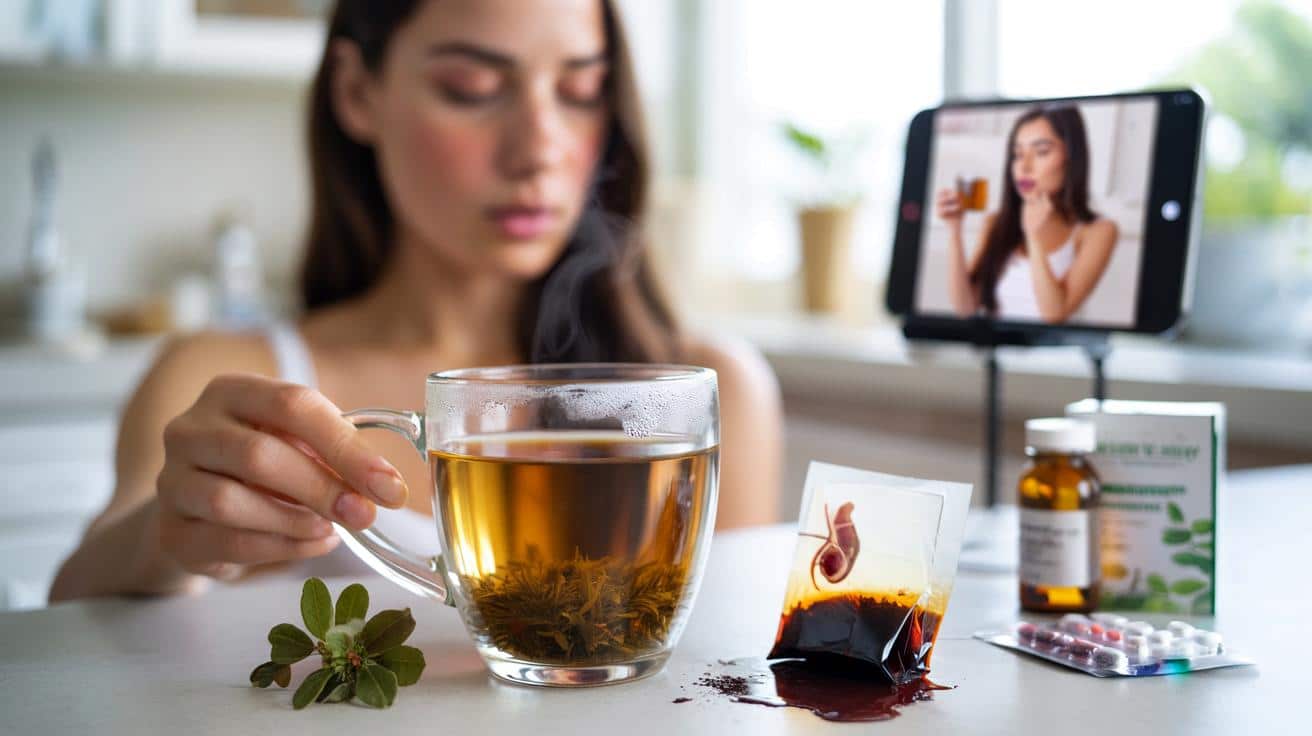
In wellness videos and TikTok reels, one steaming cup promises detox, a flatter stomach and relief from urinary discomfort. Influencers sip, smile and swear by it. Yet behind the soft focus filters, one specific herbal tea being pushed as harmless and “all natural” is starting to worry health professionals.
The herbal tea everyone is suddenly drinking
The drink at the centre of the controversy is an infusion made from bearberry leaves, better known in French as “feuilles de busserole”. Traditionally, it has been used in herbal medicine to ease urinary tract discomfort.
On social media, that old-fashioned remedy has been rebranded as a trendy wellness tea. It appears in “morning routine” clips, “what I eat in a day” videos and “UTI hacks” threads. The promise is simple: sip it regularly, stay “cleansed”, avoid antibiotics and feel lighter.
Natural branding gives this tea a health halo it does not always deserve, especially when people drink it every day for weeks.
The issue is not that bearberry leaf is inherently toxic. The concern is how it is now being used: as a casual daily drink, often without limits, and sometimes in combination with other “detox” products.
What is actually in this “gentle” tea?
Bearberry leaves contain a powerful compound called arbutin. In the body, arbutin is partly converted into hydroquinone, a substance with antibacterial properties that acts on the urinary tract.
This explains why some people do feel short-term relief. Less burning, fewer urges, a sensation that “everything is cleaner”. That perceived effect is what influencers highlight in their testimonials.
The same active molecule that brings relief can, with repeated use, put strain on the liver and kidneys.
Used occasionally and in the right dose, arbutin-based herbal products may help in very specific situations, under supervision. Taken every day as if it were simple flavoured water, the balance shifts.
➡️ Wood-burning stove: the object to place near your firewood this winter
➡️ Workers in this field often earn more by staying in one niche
➡️ Lower in calories than rice or pasta, this is the lightest starch for making a mixed salad
➡️ Spotless shower screens: the hotel trick for streak-free glass
➡️ What psychology says about people who feel uneasy when things slow down
From herbal remedy to hidden health risk
The first problem is duration. Many promotional posts quietly suggest long courses: “I’ve been drinking this for a month,” or, “I just swapped my usual tea for this one.” That is where health authorities start getting uneasy.
Long or repeated use of bearberry leaf can:
- Overwork the liver, which has to process active compounds like arbutin
- Place extra load on the kidneys, which eliminate the breakdown products
- Irritate the stomach and trigger digestive discomfort
- Alter the natural bacterial balance in the urinary tract
People who push through warning signs often think they are just “detox symptoms” rather than possible side effects.
Symptoms that are too often ignored
Health professionals report a recurring cluster of complaints among heavy users of “medicinal” herbal teas:
- Persistent headaches after several days of consumption
- Nausea or loss of appetite
- A vague sense of fatigue or malaise
- Stomach cramps or a burning feeling
Many users interpret these signals as toxins being flushed out, when they may actually be signs of excess.
The confusion is fuelled by social media rhetoric: feeling “a bit off” is reframed as proof that the product is “working”. That narrative can keep people drinking something their body is trying to reject.
When herbal tea behaves like a medicine
The core misunderstanding lies in one widespread belief: if it comes in a tea bag and says “natural”, it must be safe to drink without limits. That is not how pharmacology works.
Many medicinal plants contain concentrated active substances. They can act almost like low-dose drugs. That is what gives them their benefits, but those same properties bring contraindications, dose limits and possible interactions.
| Situation | Risk with bearberry tea |
|---|---|
| Drinking several cups daily for weeks | Increased strain on liver and kidneys, higher chance of side effects |
| Using it instead of medical care during a UTI | Delay in treatment, risk of infection spreading to kidneys |
| Combining with other detox or slimming products | Unpredictable cumulative impact on organs and hydration |
| Taking it while pregnant or on medication | Potential interactions and risks for the baby or drug efficacy |
Herbal teas sit in a grey zone: easy to buy, often marketed like lifestyle products, yet pharmacologically active enough to need limits and medical advice in some cases.
What do experts actually recommend?
Most toxicologists and herbal specialists do not call for a total ban on therapeutic plants. They ask for context, restraint and proper information.
For bearberry-based infusions, standard recommendations usually include:
- Short courses only: a few days, not weeks on end
- Specific use: for clearly identified, mild urinary discomfort
- Medical input: especially if symptoms persist, if you are pregnant, or if you have kidney or liver issues
- No routine, daily use as a “wellness drink”
Herbal remedies make sense when they act as targeted tools, not when they become a permanent background beverage.
Tisanes can absolutely play a role in self-care: a calming chamomile before bed, peppermint after a heavy meal, linden blossom during a stressful week. The problem starts when marketing turns a specific treatment plant into an all-purpose lifestyle accessory.
Influencers, sponsorships and blurred health advice
Social platforms reward bold claims, emotional stories and simple routines. A complicated medical explanation rarely goes viral. A cup, a filter, a before-and-after shot does.
Some content creators are transparent about being paid to promote herbal blends. Others genuinely share their own experiences, without realising they are giving what looks like medical advice to hundreds of thousands of followers.
That mix generates a subtle pressure: if your favourite influencer drinks this every day, skipping it can start to feel like missing out on a secret health boost.
Sponsored wellness tips can look like friendly advice, while quietly encouraging unsafe habits such as long-term use of medicinal plants.
Regulators in Europe and North America are slowly tightening rules on health claims made online, but enforcement remains patchy. In the meantime, users are left to sort marketing from medicine on their own.
How to protect yourself without giving up herbal teas
Rejecting every herbal product is not the only way to stay safe. A few simple checks can drastically reduce risk, especially for teas with specific health promises like “urinary comfort”, “liver cleanse” or “kidney detox”.
- Check the main plant’s name and look up official advice from health agencies or pharmacists
- Limit duration: think days, not months, unless a professional says otherwise
- Watch your body’s signals instead of pushing through discomfort
- Be wary of blends that hide behind vague phrases such as “proprietary mix”
- Avoid using tisanes as a substitute for proper diagnosis when symptoms persist
One practical approach: treat any herbal tea that claims a medical effect the way you would treat an over-the-counter medicine. You would not swallow painkillers three times a day for weeks “just in case”; herbal products with real effects deserve the same caution.
When a “simple UTI” is not so simple
Urinary discomfort is a common reason people turn to bearberry leaf teas. A burning sensation while urinating, frequent urges, slight pelvic pain – these are classic signs of a lower urinary tract infection.
In some mild cases, staying hydrated and using a short herbal course may ease symptoms while waiting to see if the body clears the infection. Yet relying only on tea for days can allow bacteria to climb towards the kidneys. High fever, back pain and chills then signal a more serious infection that may require urgent antibiotics.
Using herbal tea as a complement to medical care can make sense; using it instead of care carries real risks.
A reasonable scenario looks like this: symptoms start, you increase water intake, possibly use a short, well-dosed herbal course, and consult quickly if there is no improvement within 24–48 hours or if symptoms are intense. That is very different from sipping bearberry tea daily for weeks as a form of “prevention”.
Natural does not mean harmless, and that is okay
Calling something “natural” should never be the end of the conversation. Digital wellness culture often skips the crucial second half of the sentence: natural products can help, and they can harm, depending on how they are used.
Bearberry tea sits at that exact junction. It can be a useful plant when handled like a medicine. Turned into a background lifestyle drink, as seen on social media, it becomes a quiet source of strain for organs that rarely get a say in sponsored posts.
A more balanced relationship with herbal teas starts with a simple reflex: each time a drink promises a health effect, ask what is in it, how long you are meant to take it, and what could go wrong. A bit of scepticism can do more for your system than any trending “detox” ever will.