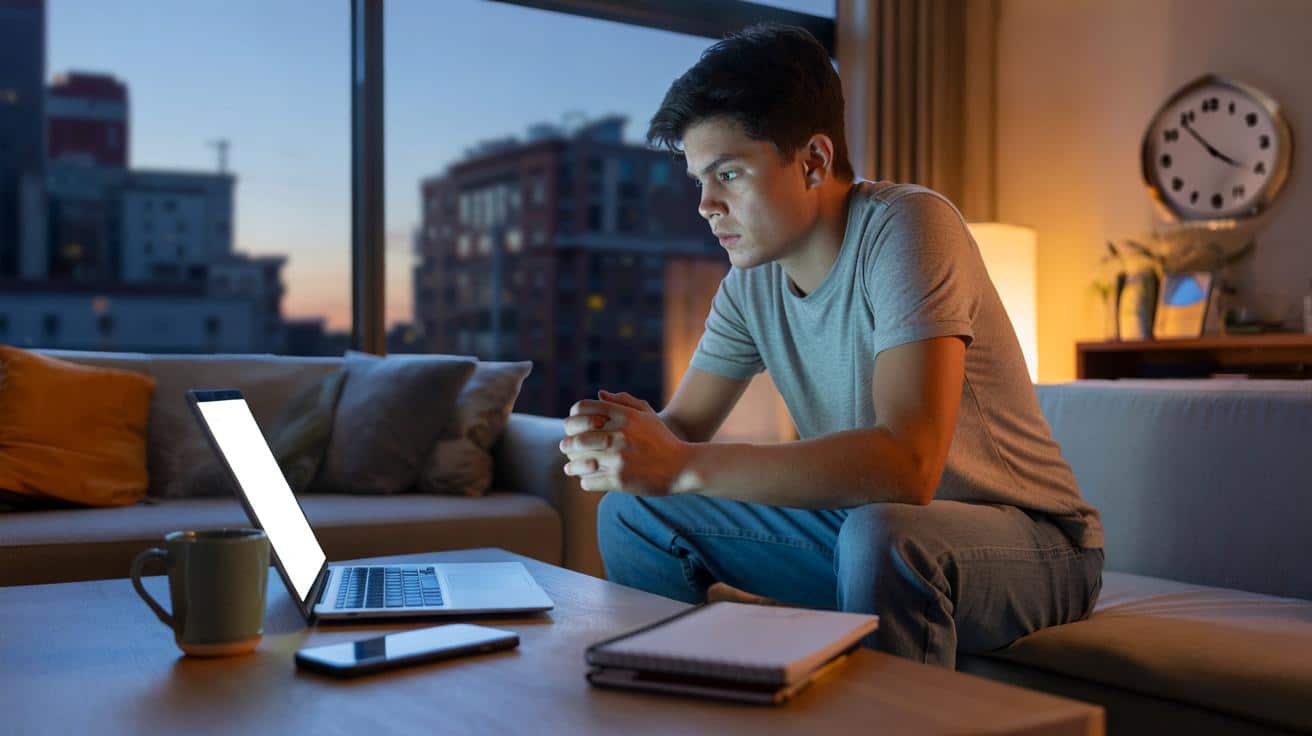
You know that strange discomfort that appears the second life gets quiet?
The emails slow down, the notifications stop buzzing, the to-do list is finally under control… and instead of relaxing, your chest tightens a little.
You look around the room, scroll your phone, open and close apps for no reason. Anything to not sit in that empty space.
We’ve all been there, that moment when the meeting finishes early or plans get canceled and the silence suddenly feels too loud.
This article is about that unease.
That itch under the skin when things slow down.
Why some people panic when the pace finally drops
Psychologists have a name for part of this urge to keep things fast: high “need for achievement” mixed with a nervous system used to constant stimulation.
If your days look like a never‑ending sprint, your brain quietly gets addicted to that tempo.
When the outside world slows, the inside world doesn’t follow right away.
Your body is still running yesterday’s race, pumping stress hormones, scanning for the next thing.
So that calm evening, that empty Sunday morning, doesn’t feel like rest.
It feels like withdrawal.
Picture this: you finish a big project at work.
Instead of feeling proud, you suddenly feel… off.
You tidy your desk, open your laptop again, check Slack “just in case”.
Your partner asks you to sit on the couch and watch something, and your leg won’t stop bouncing.
One study from the University of Virginia found that participants in a quiet room, left alone with their thoughts, often chose to give themselves small electric shocks rather than sit in silence.
Not because they were in pain before, but because doing nothing felt worse.
➡️ Spotless shower screens: the hotel trick for streak-free glass
➡️ Doctors warn: a wave of extreme fatigue is coming – here’s how to avoid it
➡️ Wood-burning stove: the object to place near your firewood this winter
➡️ Cotton buds aren’t meant for cleaning your ears – they have another use almost nobody knows
That’s what slow can trigger for some people: a rush to escape their own mind.
From a psychological angle, slowness removes the noise that covers deeper stuff.
Old worries, unresolved grief, doubts about choices… all the things you successfully mute when you’re busy.
When the tempo drops, those voices suddenly get the stage.
No wonder your brain goes, “Quick, find something to do.”
There’s also a story many of us carry: that our value equals our productivity.
If you believe that, an empty calendar doesn’t feel like rest, it feels like failure.
*Slowness becomes threatening, not soothing.*
What psychology suggests you can do with this unease
One surprisingly powerful move is to “dose” slowness instead of throwing yourself into it.
Think of it like strength training for your nervous system.
Pick a tiny slow moment on purpose: two minutes of sitting with your coffee with no phone.
Not ten, not twenty. Two.
Notice the discomfort as if you were a curious researcher.
Where does it show up in the body? Tight jaw, restless hands, a jumpy mind?
Name it out loud in a neutral way: “I feel agitation in my chest.”
You’re teaching your brain that calm isn’t dangerous, just unfamiliar.
A common trap is turning “I need to slow down” into yet another performance project.
Suddenly you “have to” meditate perfectly, journal daily, do yoga at sunrise.
Let’s be honest: nobody really does this every single day.
That pressure only adds one more reason to run from rest.
A softer approach is to attach tiny slow moments to things you already do.
Shower a bit more slowly and feel the water on your shoulders.
Walk to the bus stop without a podcast once or twice a week.
If your mind screams “this is a waste of time”, that’s not proof you’re lazy.
It’s proof your internal pace has been set to fast for a long time.
Psychologist Jon Kabat‑Zinn famously said, “You can’t stop the waves, but you can learn to surf.”
For people who feel uneasy when things slow down, the “waves” are often inside, not outside.
- Name the discomfort
Call it agitation, restlessness, or fear of nothingness. Naming makes it less blurry. - Use very small doses of calm
Start with minutes, not hours. Long empty weekends can come later. - Schedule “pointless” time
- Challenge the productivity story
- Notice what shows up when you stop
Living in a fast world without losing yourself to the speed
There’s a strange paradox in modern life.
We crave rest, fantasize about empty cabins and offline Sundays, yet many of us feel vaguely sick when life actually slows.
Psychology doesn’t label that reaction as weakness.
It reads it as a nervous system that adapted a little too well to constant urgency, constant contact, constant noise.
The invitation is not to become a slow, serene saint who never checks their phone.
The invitation is to notice the moment when busyness shifts from useful to protective.
That tiny second when you open a new tab, not because you need it, but because you don’t want to be alone with a feeling.
What happens if you pause there, just once, and breathe instead?
| Key point | Detail | Value for the reader |
|---|---|---|
| Unease in slowness has roots | Linked to stress hormones, need for achievement, and fear of inner noise | Normalizes the feeling and reduces shame |
| Small doses of calm work best | Brief, intentional pauses train the nervous system gently | Makes slowing down feel doable and less scary |
| Question the productivity myth | Self‑worth can be uncoupled from constant activity | Opens space for rest without guilt |
FAQ:
- Why do I feel anxious on holidays or weekends?Because your brain is used to constant stimulation, the sudden drop in demands can create a mismatch. Your body is still in “go mode”, so rest feels unnatural at first, even unsafe.
- Does this mean I’m a workaholic?Not automatically. You might simply have learned to use busyness to manage emotions. Workaholism is more about compulsion and identity than just liking to be active.
- Can this restlessness be a sign of anxiety or ADHD?Yes, both can play a role. People with anxiety or ADHD often struggle with unstructured time and silence. If the discomfort is intense or disruptive, talking to a professional is worth it.
- How long until slowing down feels good?There’s no fixed number, but many people notice small shifts after a few weeks of regular, short calm moments. Think in weeks and months, not days.
- Do I have to give up my fast‑paced life?You don’t. The goal isn’t to erase speed, it’s to add range. You keep your drive and energy, while also having the ability to downshift without feeling like you’re falling apart.