Every spring, beautiful red punnets arrive in supermarkets and markets, only to turn soft, dull and furry in a day or two at home. That isn’t bad luck. It usually comes down to one simple thing: where, and how, you keep them after you unpack the shopping.
Why strawberries spoil so fast
Strawberries look robust, yet they’re among the most fragile fruits you can buy. Once they’re picked, they stop ripening, so the flavour you get at the shop is the flavour you’ll have at home. From that moment, the clock is ticking.
Their thin skin and high water content make them perfect hosts for moulds and bacteria. A tiny bruise or a crushed spot becomes a gateway for rot that quickly spreads from one berry to the next.
One damaged strawberry in a box can infect the whole lot in less than 24 hours.
That’s why the decisions you make in the shop and during the first 10 minutes at home matter more than any fancy kitchen gadget.
Step one: choosing the right punnet
Good storage starts before you even pay. No container or trick will rescue strawberries that were already on the way out.
- Check the underside of the punnet for squashed or leaking berries.
- Avoid visible mould or dark, damp patches on any fruit.
- Prefer cardboard or wooden punnets over tightly sealed plastic boxes.
- Go for dry fruits with bright green caps and a strong, sweet smell.
Plastic clamshells tend to press berries together. Pressure points turn into bruises, and bruises turn into mush. Cardboard trays let them breathe and limit crushing.
The controversial wash: should you clean them first?
Once you’re home, you face a classic dilemma: wash now or later? Washing too early can soak strawberries and actually speed up mould. Yet leaving them straight from the field or packing line means they keep their load of spores and bacteria.
A quick, controlled clean can help, as long as you dry them well.
➡️ Psychology reveals why certain people feel uncomfortable when things finally slow down
➡️ Black Friday: this electric mountain bike built for rough trails drops €500 at Decathlon
➡️ Jura: “It endangers protected fish in our rivers”: the great cormorant in anglers’ sights
➡️ All people who have bread in the freezer are invited to read this information
➡️ This chicken and rice casserole cooks evenly without becoming dry
➡️ The right way to clean stainless steel without streaks
The vinegar bath that extends their life
Food scientists and many growers swear by a diluted vinegar rinse. It sounds odd, but it works.
A mix of one part white vinegar to three parts water can knock back the microbes that make strawberries rot.
Here’s a simple routine:
- Prepare a bowl with 1 part white vinegar and 3 parts cold water.
- Drop the strawberries in for 1–2 minutes only.
- Lift them out gently with your hands or a slotted spoon.
- Spread them on kitchen paper and pat them completely dry.
Do not remove the green tops, and don’t slice anything at this stage. Cutting opens the flesh and gives mould an easy path inside. Whole berries last much longer.
The big mistake: fridge or fruit bowl
Most kitchens have two obvious homes for fresh fruit: the fridge or the fruit bowl on the counter. For strawberries, both are bad choices if you want flavour and texture, especially for more than a day.
Why the fridge ruins texture and flavour
The cold air in a modern fridge is dry and aggressive for delicate fruits. At low temperatures, the cell walls in strawberries start to break down. That’s when they go from firm and juicy to flabby and watery.
Cold dulls aroma compounds too. You end up with berries that are technically fresh but taste flat.
Why the fruit bowl speeds up rot
Leaving strawberries in a fruit bowl looks pretty, particularly alongside bananas and apples. The problem: those fruits release ethylene gas and boost humidity, both of which stress strawberries.
On an open counter, strawberries sit in warm, moist air that fast-tracks mould growth.
Stacking them on top of each other in a bowl also causes bruising and hidden soft spots. By the time you notice, half the punnet is already compromised.
The sweet spot: sealed box, gentle air, cool cupboard
Growers and market gardeners tend to use a method that sounds almost too simple. It’s not the fridge. It’s not the fruit bowl. It’s a semi-sealed container in a cool, dark, airy place.
How to store strawberries so they last days, not hours
You only need a basic container and some kitchen paper:
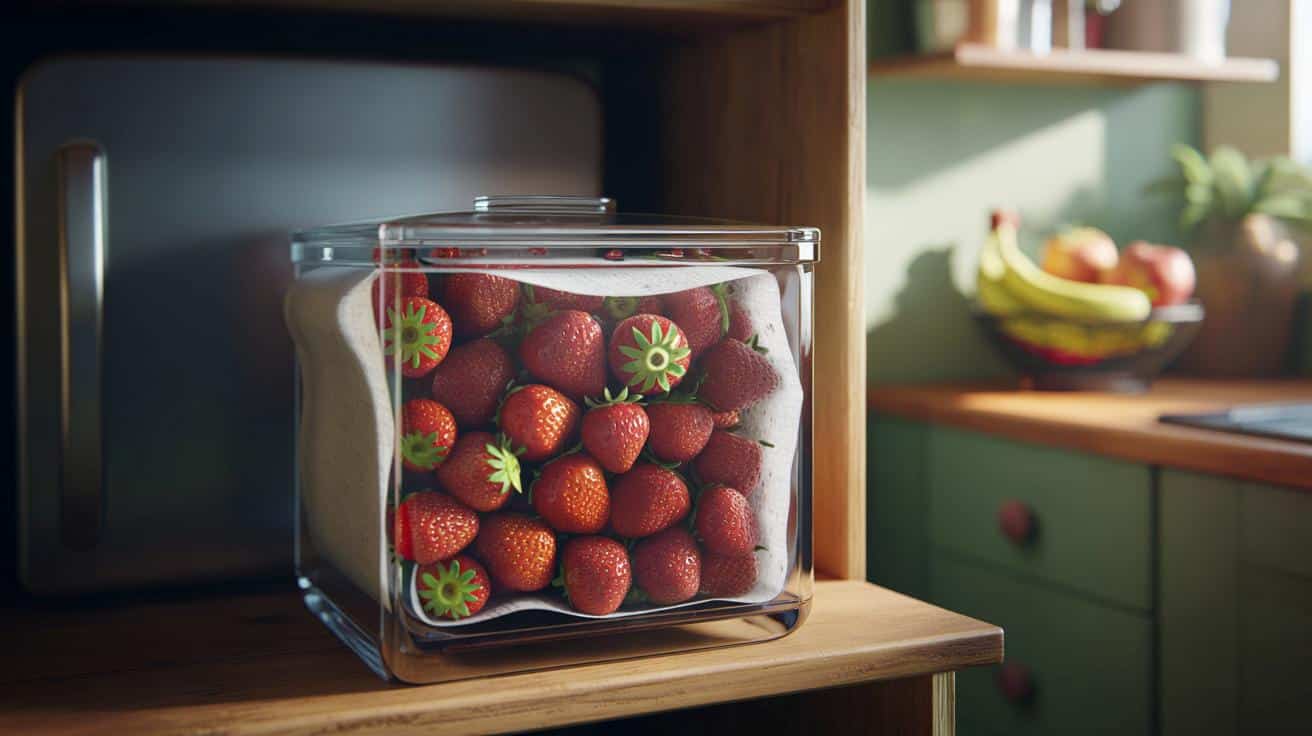
- Use a clean glass or plastic box with a lid (a standard lunchbox works).
- Line the bottom with a sheet of kitchen paper to absorb excess moisture.
- Add the dry, whole strawberries in a single layer if you can.
- If you need to stack them, separate each layer with another sheet of paper.
- Close the lid loosely or leave it slightly ajar so a little air can circulate.
The goal is a microclimate: low moisture, gentle air flow, and no crushing.
Then comes the crucial part most people skip: where you put the box.
The best place in the house for strawberries
The ideal spot is neither icy cold nor warm and bright. Think of a cool, shaded pantry, a ventilated cupboard, or a cellar-like space.
| Location | Effect on strawberries |
|---|---|
| Fridge (very cold) | Texture turns mushy, flavour fades after a short time |
| Fruit bowl (room temp, exposed) | Mould and bruising spread quickly, especially near other fruits |
| Cool, dark cupboard or pantry | Slower spoilage, better texture, taste stays fuller for longer |
A north-facing cupboard away from the oven works in many homes. In older properties, a traditional larder or cellar is almost perfect: cool, dry, not too bright. The key is to avoid big temperature swings and direct sunlight.
If your kitchen runs very hot in summer and you have no cool cupboard, the fridge can still be used for short periods. Place the prepared box on a higher shelf, not the coldest back corner, and eat the berries within a day.
How long can you realistically keep strawberries?
With this method, fresh, firm strawberries often last two to three days in good condition. Some robust varieties cope for up to four days. Fragile, early-season types might still need to be eaten within 48 hours.
You’ll know they’re on the turn if they start to leak juice onto the paper, lose their shine, or smell slightly fermented. At that stage, they’re fine for cooking in compotes or jams, but less appealing raw.
What to do if you bought too many
Anyone who has been tempted by a bargain tray of strawberries has faced the same issue: far more fruit than you can eat in a couple of days. The storage trick buys you time, but not weeks.
Here are a few emergency uses once they start softening but before mould appears:
- Freeze sliced strawberries on a tray, then bag them for smoothies and baking.
- Cook them gently with a little sugar and lemon juice for a quick compote.
- Blend them into a coulis for yoghurt, ice cream or pancakes.
- Combine with rhubarb or apples in a crumble to avoid waste.
Freezing will change the texture, so they won’t be good as fresh snacks, but the flavour stays bold for desserts and drinks.
Helpful details many people overlook
A few small habits make a surprising difference. Handle strawberries by the green tops where possible, not by squeezing the flesh. That reduces micro-bruises you can’t see immediately. Keep them away from very fragrant foods like onions and strong cheese, as they absorb odours easily.
For households with children who graze from the box, consider splitting the batch. Keep one small container for immediate snacking in the fridge, clearly labelled and easy to grab, and another larger box in the cool cupboard for the next day or two. That way, the main stash isn’t exposed each time the door opens.
Understanding mould and moisture
Mould spores are invisible and almost everywhere: on the fruit, on your hands, on the worktop. They need moisture and warmth to flourish. By drying the berries, lining the container with paper, and choosing a cool storage spot, you quietly remove most of what mould needs.
Think of strawberries as a short-lived luxury. They don’t behave like apples or oranges that sit happily in a bowl for a week. Treated gently, kept whole, and stored in that not-too-cold, not-too-warm “goldilocks” spot, they reward you with days of firm, fragrant, genuinely sweet fruit instead of a disappointing, soggy mess.