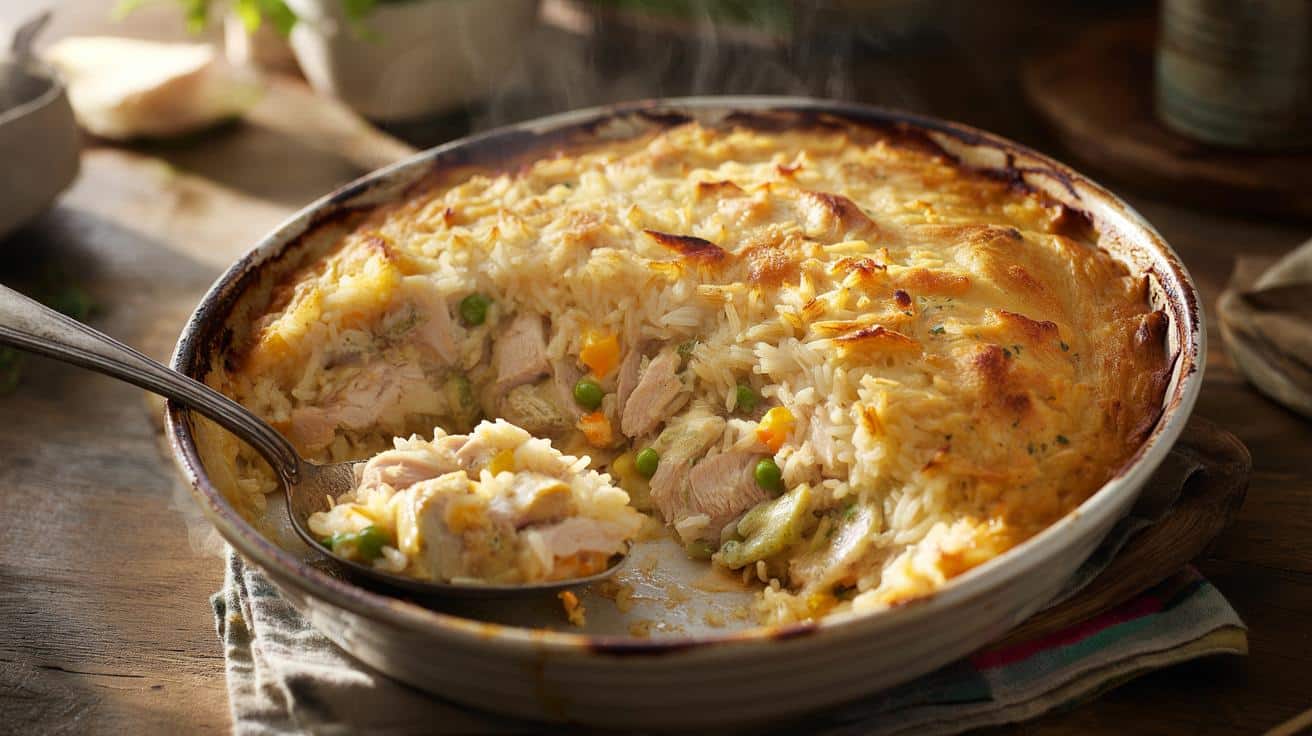
The casserole dish came out of the oven looking perfect. Bubbly edges, bronzed top, that cosy kitchen smell you wish you could bottle. Then the first spoonful landed on the plate. The top layer of rice was crunchy, the bottom a soggy swamp, and the chicken floated somewhere between stringy and suspiciously tough. The kind of dinner that makes you poke at your plate and pretend you’re “saving room for dessert”.
We’ve all been there, that moment when the picture in your head doesn’t match what’s on the table.
Yet somewhere between dry chicken and gummy rice, there’s a version of chicken and rice casserole that cooks evenly, stays juicy and tastes like an actual hug.
Finding it just takes a different way of building the dish.
The quiet reason your chicken and rice casserole goes wrong
Most people blame the oven when a casserole comes out uneven. Too hot, too old, too unpredictable. The truth usually sits right inside the dish. Huge chicken breasts on top, raw rice underneath, maybe a can of soup and a prayer over the whole thing. Then we act surprised when the meat dries out long before the rice is tender.
Oven heat doesn’t negotiate. It travels from the outside in, and it punishes anything that’s much larger or leaner than what’s around it. That’s why the top dries first while the center still fights to cook through.
A home cook from Ohio told me she used to “brace for disappointment” every time she baked chicken and rice. Her kids loved the idea of it, hated the reality. Some nights the rice was still hard at the center, other nights the edges were mush while the middle clumped together like wet clay.
One Sunday she tried something different. She sliced the chicken into bite-size pieces, sautéed them just until opaque, and stirred them straight into the raw rice and broth. Same recipe card. Same old oven. Completely different dish. For the first time, every forkful tasted the same from corner to corner of the pan.
The logic is simple, even if most recipes gloss over it. **Even cooking starts with even pieces and shared moisture.** When the chicken is cut to roughly the same size as the pockets of rice around it, the heat has an easier job. Everything warms, steams and finishes at nearly the same moment.
Raw rice needs steady liquid and time. Chicken needs shelter from direct heat to stay juicy. That’s what a good casserole is really doing: turning bubbling broth into a blanket that wraps both in gentle steam. When the pan is layered thoughtfully, that blanket actually reaches every grain.
➡️ The right way to clean stainless steel without streaks
➡️ All people who have bread in the freezer are invited to read this information
➡️ Black Friday: this electric mountain bike built for rough trails drops €500 at Decathlon
➡️ Not in the fridge or fruit bowl: the best place to keep strawberries so they don’t go mouldy
➡️ Psychology reveals why certain people feel uncomfortable when things finally slow down
➡️ Jura: “It endangers protected fish in our rivers”: the great cormorant in anglers’ sights
The method that keeps everything juicy from corner to corner
The first quiet shift is almost boring: cut the chicken smaller. Instead of laying whole breasts or thick thighs on top, cube or thinly slice them into 1–1.5 inch pieces. Toss the pieces with salt, pepper and a touch of oil, then give them a quick sear in a hot pan, just until they lose their raw color. You’re not cooking them through here, only giving them a head start and adding flavor.
Then, everything goes together: lightly seared chicken, raw rice, hot broth, and your flavor base, all mixed in the baking dish so every grain and every piece sits in the same bath. It looks almost too simple. That’s why it works.
The second shift is how you treat the liquid. Warm your broth before it hits the rice. Cold stock in a cold dish in a hot oven creates a long, uneven warm-up where the edges boil and the center still shivers. Warm stock, on the other hand, asks less of the oven and gives the rice a fair start.
Cover the dish tightly for most of the bake. Foil, a lid, even a baking sheet on top if that’s what you have. This traps steam, turning the dish into a gentle rice cooker. Only near the end do you uncover it, letting the top dry just slightly and pick up a bit of color without sacrificing moisture underneath.
There’s a quiet confession many good home cooks eventually make.
“Let’s be honest: nobody really does this every single day,” a busy dad in Texas told me. “Most nights I’m throwing things into a pan and hoping they behave. This is the first casserole where I don’t feel like I’m gambling on dinner.”
Once you understand the rhythm, a reliable chicken and rice casserole becomes less of a recipe and more of a template:
- Same basic ratio of rice to broth.
- Chicken cut to bite-size, lightly pre-seared.
- Dish covered for steam, uncovered briefly for texture.
*The pan does the work, you just set the stage properly once.*
A dish worth sharing on a tired Tuesday night
There’s something quietly powerful about a casserole that behaves. No drama, no crossed fingers in front of the oven door. Just a pan that comes out, you lift the foil, and the rice is tender from center to edge while the chicken stays soft and juicy. It doesn’t need a filter or a reel. It just needs spoons.
When dinner feels predictable in a good way, the whole evening softens. Kids wander in asking what smells so good. A roommate hovers with a bowl “just to taste”. You take that first bite and realize you’re not mentally drafting a backup plan.
This kind of chicken and rice doesn’t shout. It shows up on weeknights when you’re running on fumes, and on Sundays when there’s laundry on every chair. It’s cheap, it’s forgiving, it reheats well, and it has room for your habits—extra garlic, frozen peas tossed in, the last lonely carrot sliced on top.
**Plain truth: a casserole like this isn’t about chasing perfection, it’s about having one solid thing you can count on.** When the world outside the kitchen feels a bit sideways, an even, not-dry, quietly delicious pan of chicken and rice is more comforting than it has any right to be.
And if you’ve ever scraped the edges of a failed casserole straight into the trash, you know how much that’s worth.
| Key point | Detail | Value for the reader |
|---|---|---|
| Unified mixing | Stir chicken, rice and hot broth together instead of layering | Promotes even cooking and consistent texture |
| Smaller chicken pieces | Cubed or thinly sliced, lightly pre-seared | Prevents dry meat and keeps bites juicy |
| Steam-first baking | Bake covered, then briefly uncover at the end | Gives tender rice with a gently textured top |
FAQ:
- Should I use white or brown rice for this casserole?White long-grain or jasmine rice works best because it cooks at a similar pace to bite-size chicken. Brown rice needs more liquid and time, so if you use it, increase the broth and extend the bake, keeping the dish covered longer.
- Can I use frozen chicken?Yes, but thaw it fully before cutting and searing. Frozen-solid pieces release too much water and cool the whole dish, which leads to uneven cooking and pale, steamed meat instead of flavorful bites.
- Why did my rice still come out crunchy?Most often the liquid ratio was too low or the dish wasn’t covered tightly. Use enough hot broth to just submerge the rice and seal the top well so steam can’t escape during the first part of baking.
- How do I stop the top from drying out?Keep the casserole covered for at least 80–90% of the cooking time. Uncover only at the end, and if it seems to be drying too fast, you can drizzle a little extra warm broth around the edges.
- Can I assemble it ahead of time?You can mix everything and refrigerate for a few hours, but expect it to need a bit more baking time. Take the chill off by letting the dish sit at room temperature for 15–20 minutes before it goes in the oven.